
Are you struggling to find the perfect pillow that supports your neck and gives you a restful night’s sleep? Choosing between a millet pillow and a buckwheat pillow can be confusing.
Both offer natural comfort, but which one suits your needs best? You’ll discover the key differences, benefits, and drawbacks of each pillow type. By the end, you’ll be able to make a confident choice that could transform your sleep quality and overall comfort.
Keep reading to find out which pillow is truly made for you.

Credit: www.youtube.com
Millet Pillow Basics
Millet pillows offer a natural and simple option for better sleep. These pillows use millet husks as filling. This filling gives a unique feel different from other pillows. Understanding the basics helps to see if a millet pillow suits your needs.
Millet pillows have a natural design that supports the head and neck. They allow air to flow, keeping the pillow cool. This makes them a popular choice for people who want a natural sleep aid.
Material And Structure
Millet pillows are filled with tiny millet husks. These husks are light and hollow. They provide gentle support by adjusting to the shape of your head. The pillow cover is usually made from cotton or linen. This allows air to pass through easily.
Comfort And Support
Millet pillows offer firm but flexible support. The husks move inside the pillow to fit your neck shape. This reduces pressure points. They are ideal for side and back sleepers. The pillow can be adjusted by adding or removing husks.
Durability And Maintenance
Millet pillows last a long time with proper care. The husks stay firm and do not break down quickly. You should air the pillow regularly to keep it fresh. The pillow cover is washable. Avoid getting the husks wet to prevent mold.
Credit: beanproducts.com
Buckwheat Pillow Features
Buckwheat pillows offer unique benefits for a good night’s sleep. They are known for their natural filling and firm support. Many people choose them for comfort and durability. Understanding their key features helps in making the right choice.
Material And Filling
Buckwheat pillows are filled with buckwheat hulls. These hulls are the outer shells of buckwheat seeds. They are firm but allow air to flow through. This makes the pillow cool and breathable. The pillow cover is usually made from cotton or linen. It feels soft and easy to clean.
Adjustability And Firmness
The filling inside buckwheat pillows can be adjusted. You can add or remove hulls to change the firmness. This helps the pillow fit your neck and head perfectly. The firmness supports proper spine alignment. It reduces neck pain and stiffness. Many users like this custom fit feature.
Longevity And Care
Buckwheat pillows last a long time if cared for well. The hulls do not break down quickly. The pillow cover can be removed and washed. Keep the hulls dry to avoid mold or odor. Occasionally, you can spread the hulls out to air them. This helps keep the pillow fresh and clean.
Comfort Comparison
Choosing the right pillow affects your sleep quality. Millet and buckwheat pillows offer different comfort levels. Understanding their comfort features helps you decide the best fit for your needs.
Both pillows support your head and neck but differ in feel and support style. Let’s explore their comfort traits under pressure relief, breathability, and noise level.
Pressure Relief
Millet pillows have tiny, smooth grains that spread evenly. This gives gentle support to your head and neck. They mold softly to your shape, reducing pressure points.
Buckwheat pillows contain larger, harder hulls. They provide firmer support and keep your head in place. This pillow helps keep your spine aligned but may feel less soft.
Breathability
Millet pillows allow air to flow through small gaps between grains. This keeps the pillow cool and fresh during sleep. It is good for hot sleepers or warm climates.
Buckwheat pillows have more space between hulls, which improves airflow. They stay cooler than many traditional pillows. This pillow also helps reduce sweating at night.
Noise Level
Millet pillows are almost silent when you move. The tiny grains shift quietly, causing little to no noise. This helps maintain a peaceful sleep environment.
Buckwheat pillows can make a rustling sound as hulls move. Some find this noise soothing, like soft crackling. Others may find it distracting, especially light sleepers.
Health Benefits
Choosing the right pillow impacts your health in many ways. Millet and buckwheat pillows both offer unique benefits. Understanding these can help you sleep better and feel healthier. Here are some key health benefits of each pillow type.
Neck And Spine Alignment
Millet pillows gently support your neck and head. Their small, smooth grains allow the pillow to mold easily. This helps keep your spine aligned during sleep. Buckwheat pillows provide firmer support. The hulls hold their shape and reduce pressure points. They help maintain natural neck curves. Both pillows reduce neck pain and stiffness.
Allergy Considerations
Millet pillows are less likely to cause allergies. The grains are naturally hypoallergenic and resistant to dust mites. Buckwheat pillows also resist dust mites well. However, some people may react to the hulls. Both pillows need proper cleaning to avoid mold and bacteria. Choose the pillow that fits your allergy needs best.
Temperature Regulation
Millet pillows stay cool but can trap some heat. Their small grains allow moderate airflow. Buckwheat pillows offer excellent breathability. The hulls create air gaps that let heat escape. This keeps your head cool and dry. Both pillows help regulate temperature better than synthetic options.
Environmental Impact
Choosing the right pillow affects more than your sleep. It also impacts the planet. Understanding the environmental impact of millet and buckwheat pillows helps you make a greener choice. Both materials offer unique benefits for sustainability. Let’s explore how they compare in key areas.
Sustainability Of Materials
Millet grows quickly with little water. It needs fewer chemicals to thrive. This makes it a low-impact crop. Buckwheat also grows fast and enriches the soil. It requires no synthetic fertilizers. Both plants support eco-friendly farming. They reduce the strain on natural resources.
Biodegradability
Millet hulls break down naturally in soil. They add nutrients as they decompose. Buckwheat hulls also biodegrade without harm. Both pillows leave minimal waste after use. They avoid plastic fillers that pollute landfills. Choosing natural fillings supports a cleaner environment.
Eco-friendly Manufacturing
Millet pillow production uses simple processes. It avoids heavy machinery and harmful chemicals. Buckwheat pillows require minimal processing too. Both options keep energy use low during making. This lowers their overall carbon footprint. Eco-friendly manufacturing helps preserve the earth’s health.
Price And Availability
Price and availability play a big role in choosing between millet and buckwheat pillows. Knowing the cost and where to find these pillows helps make a smart choice. Both pillow types offer different price points and purchase options. Understanding warranty and return policies adds more value to your buying decision.
Cost Comparison
Millet pillows usually cost less than buckwheat pillows. Millet filling is cheaper and easier to source. Buckwheat pillows often have a higher price due to the hulls used inside. Prices range from budget options to premium models for both pillows. The price depends on size, brand, and quality of materials.
Where To Buy
Millet and buckwheat pillows are available in many stores. Health shops and eco-friendly stores often stock both types. Online retailers offer a wider selection and competitive prices. Some brands sell directly through their websites. Local shops may have limited options but allow you to try before buying.
Warranty And Return Policies
Most millet and buckwheat pillow brands offer warranties. Warranties cover defects in materials or workmanship. Return policies vary by seller and brand. Many stores accept returns within 30 days if the pillow is unused. Check warranty and return details before purchasing to avoid surprises.
User Experiences
User experiences give real insight into how millet and buckwheat pillows perform. Many people share their honest thoughts about comfort, support, and overall satisfaction. These reviews help understand which pillow suits different sleep needs.
Sleep Quality Reviews
Many users say buckwheat pillows offer firm support. This helps keep the neck aligned. It may improve sleep for those with neck pain. Millet pillows feel softer and lighter. They provide gentle support and good airflow. Some sleepers find millet pillows perfect for hot nights. Others feel buckwheat pillows help reduce tossing and turning.
Common Complaints
Buckwheat pillows can be noisy. The hulls sometimes make a rustling sound. Some find the pillow too firm or heavy. Millet pillows may flatten faster than expected. A few users report a slight odor at first. Both pillows need occasional shaking to stay fluffy. Some users want more adjustable fill options.
Popular Brands
Brands like Hullo and Sobakawa are known for buckwheat pillows. They focus on natural, high-quality hulls. Millet pillow brands include Nature’s Sleep and Organic Cotton Plus. These brands emphasize organic materials and comfort. Many users trust these brands for durability and support. They often get high ratings for customer service too.

Credit: brettsnaturalhealth.com
Frequently Asked Questions
What Are The Main Differences Between Millet And Buckwheat Pillows?
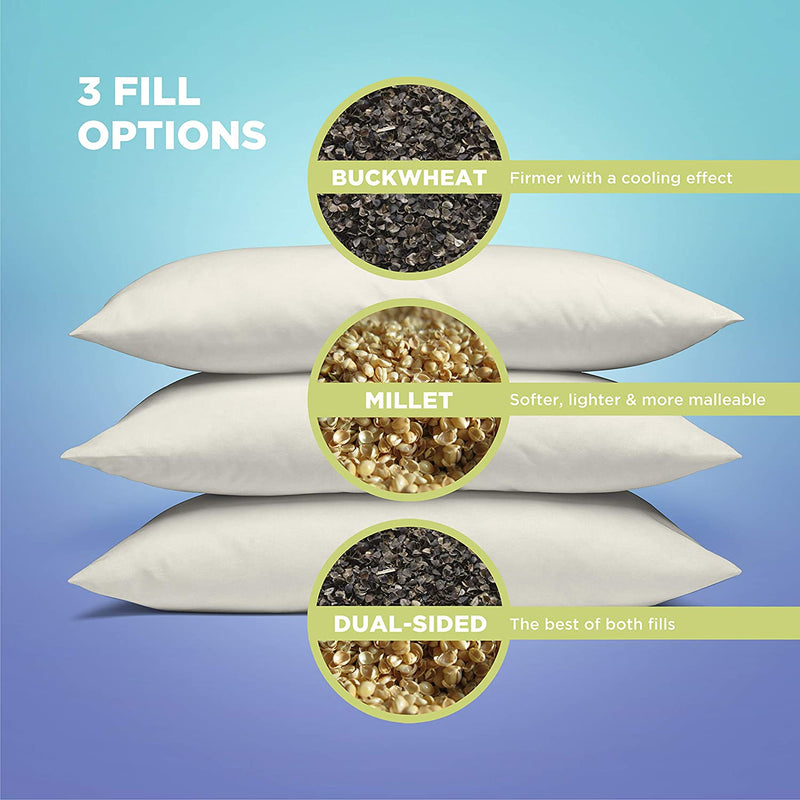
Millet pillows use small, smooth millet husks, while buckwheat pillows contain larger, firm buckwheat hulls. Millet pillows feel softer and lighter. Buckwheat pillows provide firmer support and better airflow. Choice depends on comfort preferences and support needs.
Which Pillow Is Better For Neck Pain Relief?
Buckwheat pillows are generally better for neck pain. Their firm hulls conform to your neck shape, offering strong support. Millet pillows are softer and less supportive, making them less ideal for pain relief. Proper support helps maintain spinal alignment during sleep.
Are Millet Pillows Hypoallergenic Compared To Buckwheat?
Both millet and buckwheat pillows are naturally hypoallergenic. Millet husks resist dust mites and mold. Buckwheat hulls are also resistant but may need regular airing. Both pillows suit allergy sufferers well, but millet may feel softer on sensitive skin.
How Long Do Millet And Buckwheat Pillows Last?
Buckwheat pillows typically last 3 to 5 years with proper care. Millet pillows last around 2 to 3 years. Buckwheat hulls are more durable and maintain shape longer. Regular fluffing and airing extend both pillows’ lifespan effectively.
Conclusion
Both millet and buckwheat pillows offer unique benefits. Millet pillows are light and soft, good for gentle support. Buckwheat pillows provide firm support and help with neck pain. Choose based on your comfort and sleep needs. Both pillows allow air flow, keeping you cool at night.
Try each to see which suits you best. Comfort and support matter most for a good night’s sleep. Your perfect pillow is waiting.